What Falling Unemployment Claims Could Mean for American Household Financial Confidence
Anúncios
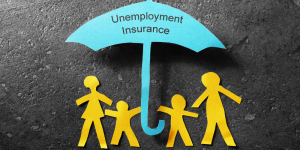
For the week ending September 12, 2026, the number of Americans filing initial unemployment insurance claims fell to 196,000, down from 206,000 the previous week. The four-week moving average also declined to 203,250. Both measures came from the latest U.S. Department of Labor report released September 17.
The decline is significant because unemployment claims provide one of the more frequent indicators of labor-market conditions. When fewer people are losing jobs and filing for unemployment benefits, households may have greater confidence that employment opportunities remain available.
However, the picture is not entirely straightforward.
While initial claims have recently fallen, consumer sentiment remains relatively weak. The University of Michigan’s preliminary September 2026 consumer sentiment index fell to 47.8, compared with 51.7 in August and 55.1 a year earlier. The expectations index also declined to 45.8.
Anúncios
This creates an interesting economic situation: job-loss indicators have improved while many Americans continue to feel financially uncertain.
In This Comprehensive Guide, Readers Will Learn:
- Why U.S. unemployment claims are falling
- What the latest jobless-claims data says about the labor market
- How employment security can influence household confidence
- Why Americans may remain financially cautious despite fewer layoffs
- How wages and inflation affect household optimism
- What falling unemployment claims could mean for consumer spending
- Why credit card debt and emergency savings still matter
- How the job market could affect housing and borrowing decisions
- What businesses and investors are watching
- What American households should watch through the rest of 2026
What Are Unemployment Claims Telling Americans Right Now?
Unemployment claims measure the number of people who are newly applying for unemployment insurance.
Anúncios
They are closely watched because they can provide an early indication of whether layoffs are increasing or decreasing.
The latest data showed:
- 196,000 initial claims for the week ending September 12
- A 10,000 weekly decline
- 203,250 four-week moving average
- A 2,750 decline in the four-week average
The Department of Labor’s previous report showed 206,000 initial claims for the week ending September 5.
The recent decline suggests that the number of newly unemployed workers applying for benefits remains relatively contained.
For households, that can matter because employment is one of the foundations of financial security.
A worker who feels confident about keeping a job may be more comfortable paying bills, making purchases, saving money or taking on a major financial commitment.
Falling Claims Do Not Mean Every Household Feels Secure
One of the most important points is that unemployment claims are only one measure of the economy.
A person does not have to lose a job to feel financially vulnerable.
Households can become concerned about their finances because of:
- Higher food prices
- Housing costs
- Credit card balances
- Expensive healthcare
- Higher insurance premiums
- Transportation costs
- Student loan payments
- Uncertainty about future employment
- Difficulty finding a better-paying job
This helps explain why the latest consumer-confidence data remains weak despite the improvement in unemployment claims.
The University of Michigan’s preliminary September survey showed overall consumer sentiment at 47.8, down 7.5% from August and 13.2% below September 2025.
In other words, fewer new unemployment claims do not automatically translate into stronger household confidence.
The U.S. Unemployment Rate Remains at 4.1%
The latest monthly employment data also provides important context.
According to the Bureau of Labor Statistics, the U.S. unemployment rate remained at 4.1% in August 2026. Total nonfarm payroll employment increased by 162,000 during the month.
Average hourly earnings for private-sector workers increased by 0.3% in August, reaching $37.75.
Over the year, average hourly earnings increased 3.1%.
This combination provides two different signals for households.
On one side, employment remains relatively resilient.
On the other, Americans are still dealing with the cost of living and other financial pressures.
Why Job Security Matters to Financial Confidence
Household financial confidence is not determined only by how much money a person earns.
It is also influenced by how predictable that income feels.
Consider two households earning the same annual salary.
One household may have a stable job with predictable hours and strong benefits.
The other may have a job with uncertain hours, frequent schedule changes or concerns about potential layoffs.
Their financial confidence could be very different even if their annual income is identical.
That is why falling unemployment claims can be important.
They may reduce some of the fear surrounding job loss, particularly when the decline continues over several weeks.
Fewer Layoffs Could Support Consumer Spending
Consumer spending accounts for a large portion of U.S. economic activity.
When workers feel secure about their employment, they may be more willing to spend money on discretionary purchases.
Examples include:
- Restaurants
- Travel
- Entertainment
- Electronics
- Clothing
- Home improvements
- Vehicles
- Recreational activities
A household that is worried about losing its job may postpone these purchases.
Instead, it may increase savings or reduce debt.
If concerns about layoffs decline, some households may become more comfortable spending again.
However, the effect depends heavily on inflation and household income.
Inflation Can Offset Improvements in Job Security
A worker may feel secure about keeping a job while simultaneously feeling that their paycheck does not go far enough.
This is particularly important in 2026 because household budgets continue to face elevated costs.
Even if employment remains relatively stable, Americans may still worry about:
- Rent or mortgage payments
- Groceries
- Gasoline
- Electricity
- Insurance
- Medical bills
- Childcare
- Education
This creates an important distinction between employment confidence and overall financial confidence.
A household can be confident that it will receive its next paycheck while remaining worried about how much of that paycheck will be left after paying essential expenses.
Wage Growth Provides Another Piece of the Picture
Wages can help determine whether improved employment conditions translate into stronger household finances.
BLS reported that average hourly earnings increased 3.1% over the year through August 2026.
Whether that feels positive to households depends on how quickly prices are increasing.
If wages rise faster than household expenses, purchasing power can improve.
If essential costs rise at a similar or faster pace, workers may not experience much improvement in their financial situation.
That is why wage growth needs to be considered alongside inflation rather than viewed separately.
Why Consumers May Still Be Cautious
The September University of Michigan survey provides an important warning.
Consumer sentiment dropped from 51.7 in August to 47.8 in September. The current-conditions index declined to 50.9, while the expectations index fell to 45.8.
This suggests that households are still expressing substantial concerns about economic conditions.
Several factors can contribute to this type of caution.
People may worry about future prices.
They may be concerned about employment even if they have not personally experienced a layoff.
They may be carrying expensive debt.
Or they may simply be trying to rebuild savings after a period of higher household expenses.
Emergency Savings Remain Important
One reason employment conditions matter so much to households is that unemployment can quickly create a cash-flow problem.
A household with several months of emergency savings has more time to search for another job.
A household with little or no savings may need to rely on:
- Credit cards
- Personal loans
- Family assistance
- Reduced spending
- Retirement-account withdrawals
Therefore, falling unemployment claims can be reassuring, but household financial resilience still depends heavily on individual savings.
The broader lesson is that job-market stability and household balance sheets work together.
Credit Card Debt Could Affect Confidence
Credit cards can become an important financial safety net when households experience unexpected expenses.
However, high interest rates can make balances increasingly difficult to repay.
A worker who has stable employment may still feel financially stressed if a large portion of each paycheck goes toward debt payments.
This means that stronger employment conditions do not automatically eliminate financial pressure.
For many households, financial confidence is likely to depend on several factors simultaneously:
Income + employment stability + expenses + debt + savings.
Falling Claims Could Be Helpful for Housing Decisions
Employment stability can also affect decisions involving housing.
Buying a home is one of the largest financial commitments most Americans make.
A worker who is uncertain about their employment may be reluctant to purchase a home, even if they qualify for a mortgage.
Stable employment can make households more comfortable planning for:
- Down payments
- Mortgage payments
- Moving costs
- Home repairs
- Property taxes
- Insurance
However, employment is only one part of the housing equation.
Mortgage rates, home prices and inventory remain important considerations.
Therefore, falling unemployment claims alone are unlikely to determine whether housing activity accelerates.
Auto Purchases Could Also Be Affected
The same principle applies to vehicles.
A household worried about job security may postpone replacing an older vehicle.
If employment confidence improves, some consumers may feel more comfortable taking on a car payment.
However, borrowing costs remain important.
Even a financially secure worker may delay a vehicle purchase if the monthly payment is too high.
Businesses Could Benefit From Greater Consumer Confidence
Companies also have a reason to monitor unemployment claims.
When households feel financially secure, businesses may see stronger demand for products and services.
That can influence decisions involving:
- Hiring
- Inventory
- Expansion
- Marketing
- Capital investment
A healthier labor market can therefore create a feedback loop.
More stable employment can support household spending.
Stronger consumer demand can support business revenue.
Stronger revenue can encourage some businesses to maintain or increase hiring.
This relationship is not automatic, but it is one reason labor-market indicators receive so much attention.
Falling Claims Can Also Affect Federal Reserve Expectations
Labor-market data is important to the Federal Reserve because employment conditions are part of the central bank’s broader economic assessment.
The Fed also closely watches inflation, economic growth, financial conditions and other indicators.
The latest claims data alone cannot determine monetary policy.
However, a sustained decline in unemployment claims could signal that layoffs remain contained.
The opposite would be true if claims began rising consistently.
That is why investors usually focus on trends rather than a single weekly number.
Why the Four-Week Average Matters
Weekly unemployment claims can move around because of holidays, seasonal patterns, weather and other temporary factors.
The four-week moving average helps smooth some of that volatility.
The latest four-week average was 203,250, down from 206,000 the previous week.
This makes the recent decline more notable than simply looking at the 196,000 weekly figure.
Still, the four-week average should be interpreted alongside other labor-market indicators.
What About Continuing Unemployment Claims?
Initial claims show new applications for unemployment benefits.
Continuing claims provide a different perspective by showing people who remain on unemployment insurance.
Together, they can provide more information about whether unemployed workers are quickly finding new jobs or remaining unemployed for longer periods.
For households, this distinction is important.
Fewer new layoffs are encouraging, but workers can still face financial pressure if finding another job takes longer.
The Labor Market Is Not Identical Across the Country
National unemployment figures can hide important regional differences.
The latest BLS state report showed that unemployment rates fell in eight states and the District of Columbia in August, while rates were stable in 42 states. Fourteen states and the District had lower unemployment rates than a year earlier, while 10 states had higher rates.
That means financial confidence can vary considerably from one part of the country to another.
A state with strong hiring in healthcare, construction or government may experience different conditions from a region where manufacturing or technology employment is weaker.
Local labor markets therefore matter to individual households.
Falling Claims Do Not Guarantee More Hiring
There is another important distinction.
A low number of new unemployment claims primarily tells us that layoffs are not accelerating.
It does not necessarily mean companies are hiring aggressively.
A business can maintain its current workforce while reducing job openings.
This is sometimes described as a low-hiring, low-firing environment.
For workers, that can create a mixed experience.
People who already have jobs may feel relatively secure, while job seekers may find it difficult to move into new positions.
Why Job Seekers May Have a Different Experience
Household financial confidence can depend heavily on whether a person is already employed.
A worker with a stable job may interpret falling claims positively.
Someone who has been unemployed for several months may not experience the same benefit.
That person may be more concerned about:
- The number of available positions
- Competition for jobs
- Time spent searching
- Salary offers
- Location requirements
- Skills requirements
- Benefits
This is why unemployment claims should never be treated as a complete picture of the labor market.
What Falling Claims Could Mean for the Holiday Shopping Season
The final months of the year are particularly important for U.S. retailers.
If employment remains stable and households maintain income growth, consumers may continue spending during the holiday season.
However, weak consumer sentiment could encourage households to remain selective.
Consumers may prioritize:
- Discounts
- Essential purchases
- Lower-cost brands
- Promotions
- Credit-card rewards
- Delayed purchases
Retailers will therefore be watching both employment data and consumer confidence closely.
What American Households Should Watch Through the Rest of 2026
Several economic indicators can help households understand whether financial conditions are genuinely improving.
1. Weekly unemployment claims
Continued declines could indicate that layoffs remain limited.
2. The unemployment rate
The latest rate was 4.1% in August. The September employment report is scheduled for October 2.
3. Wage growth
Households should compare wage increases with the cost of essential goods and services.
4. Inflation
Lower inflation can make stable employment feel more valuable because more of each paycheck can be used for savings or discretionary spending.
5. Consumer confidence
The University of Michigan’s final September sentiment report is scheduled for September 25.
6. Job openings
The next BLS Job Openings and Labor Turnover Survey, covering August 2026, is scheduled for September 29.
7. Household debt
Credit-card balances, auto loans and other debt can determine whether income gains actually improve financial flexibility.
A Practical Financial Checklist for American Families
Even when the labor market appears stable, households can take steps to strengthen their financial position.
Build or rebuild emergency savings
A dedicated emergency fund can reduce dependence on credit if employment changes.
Review monthly expenses
Identify recurring expenses that can be reduced without affecting essential needs.
Pay attention to high-interest debt
Credit-card interest can consume a significant portion of monthly cash flow.
Avoid assuming that job security will last forever
A strong labor market does not eliminate individual employment risk.
Consider skills and career development
Workers can improve their resilience by maintaining skills that are relevant to their industries.
Keep financial plans flexible
Households should consider how they would respond to a temporary income reduction.
What This Could Mean for American Financial Confidence
The latest unemployment-claims data provides a reason for cautious optimism about job stability.
New claims fell to 196,000, while the four-week average also declined.
At the same time, consumer sentiment remains weak.
That combination suggests that American financial confidence depends on much more than whether people are being laid off.
Households are also thinking about prices, wages, debt, savings and their expectations for the future.
If employment remains stable while inflation pressures ease and wages continue growing, households could gradually feel more financially comfortable.
If prices remain elevated or hiring weakens, however, confidence could remain under pressure even if unemployment claims stay relatively low.
Final Thoughts
Falling unemployment claims are an important signal for the U.S. economy because they suggest that fewer workers are newly entering the unemployment system.
The latest Department of Labor data showed initial claims falling to 196,000 for the week ending September 12, while the four-week average declined to 203,250.
The broader labor market also remains relatively stable. The unemployment rate was 4.1% in August, while employers added 162,000 jobs and average hourly earnings increased 3.1% over the year.
Yet American households are not necessarily feeling confident.
Preliminary September consumer sentiment fell to 47.8, well below both August’s 51.7 and September 2025’s 55.1.
This contrast is important.
A stable labor market can provide an important foundation for household financial security, but confidence also depends on what happens to the rest of the household budget.
Americans may feel more secure when they know their jobs are stable, but they also need their income to keep pace with housing, food, healthcare, transportation and debt costs.
For the remainder of 2026, the key question will therefore be whether the current labor-market stability translates into stronger household finances.
The next unemployment, job-openings, wage and consumer-confidence reports will provide additional clues. For families, the most meaningful improvement would likely come from a combination of stable employment, continued wage growth, manageable inflation and stronger household savings.
Until then, falling unemployment claims offer an encouraging labor-market signal—but they are only one part of the financial-confidence story.