How New Concerns Over U.S. Data Centers Are Affecting Electricity Prices, Water Supply, and Local Communities
Anúncios
Data centers have become one of the most important pieces of America’s artificial intelligence and technology expansion. Facilities filled with powerful computer servers are being built across the United States to support cloud computing, AI systems, streaming, financial services, online platforms, and other digital operations.
But the rapid expansion of data centers is creating a new debate in communities across the country.
Supporters argue that these facilities can bring investment, construction activity, tax revenue, jobs, and technological growth. Critics are increasingly concerned about the amount of electricity and water required to operate them and whether local residents could end up paying higher infrastructure costs.
Those concerns have become more visible in 2026 as utilities and regulators respond to rapidly growing electricity demand.
Anúncios
The U.S. Energy Information Administration says electricity demand has been rising after more than a decade of relatively little growth, with data centers becoming a major driver. Between 2020 and 2025, U.S. electricity demand increased by about 1.7% annually, compared with just 0.1% per year between 2005 and 2019.
At the same time, federal energy officials are examining how large new electricity customers should contribute to the cost of grid upgrades.
The debate is increasingly becoming a question of who should pay for America’s AI infrastructure — technology companies, utilities, governments, or ordinary electricity customers.
Anúncios
In This Comprehensive Guide, Readers Will Learn:
- Why U.S. data centers are expanding so quickly
- How AI is increasing electricity demand
- Whether data centers can contribute to higher electricity prices
- Why local residents are concerned about paying for grid upgrades
- How much electricity data centers could consume in the coming years
- Why water use has become a major community concern
- How data centers can affect local water systems
- Why some modern facilities use less water than older cooling systems
- How data centers can affect jobs, taxes, housing, and infrastructure
- Why some communities are imposing restrictions on new facilities
- What federal regulators are doing about large electricity customers
- What Americans should watch as data-center construction continues
Why Are Data Centers Expanding Across the United States?
The biggest reason is the rapid growth of artificial intelligence.
AI models require enormous amounts of computing power. That computing power is provided by specialized servers housed inside data centers.
As companies develop larger AI models and expand cloud services, they need more computing capacity.
That means more:
- Data centers
- Servers
- Electricity generation
- Transmission lines
- Substations
- Fiber-optic networks
- Cooling systems
- Water infrastructure
The scale of the expansion is significant.
A 2025 update from the U.S. Department of Energy estimated that U.S. data centers consumed approximately 192 terawatt-hours of electricity in 2024, representing about 4.7% of total U.S. electricity consumption. The report’s reference case projects data-center electricity use could reach approximately 649 TWh by 2030, equivalent to about 11.8% of projected U.S. electricity use.
That does not mean every data center will use the same amount of electricity, but it illustrates why the sector is attracting increasing attention from energy regulators.
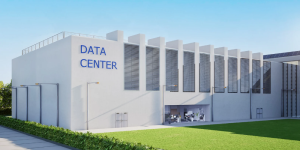
Electricity Demand Is Becoming a Bigger Issue
For many years, U.S. electricity demand was relatively stable.
That is changing.
The EIA’s 2026 Annual Energy Outlook identifies data-center load as a major driver of long-term electricity-demand growth. The agency projects U.S. electricity consumption to grow between 0.9% and 1.6% annually through 2050 across its modeled cases.
Data centers are particularly significant because they can operate around the clock.
A residential customer may use more electricity during certain hours and less during others.
A large data center can require substantial and relatively continuous power.
This creates challenges for utilities that must ensure enough generation and transmission capacity is available.
Could Data Centers Increase Electricity Prices?
This is one of the biggest concerns among communities hosting data centers.
The answer is not simply yes or no.
Data centers do not automatically cause electricity rates to increase for everyone. However, rapid growth in large electricity demand can require utilities to invest in new generation, transmission, substations, and distribution infrastructure.
If those costs are not allocated appropriately, some of the financial burden could potentially be passed on to other electricity customers.
The federal government has explicitly recognized this concern.
In June 2026, the Federal Energy Regulatory Commission took action involving six regional grid operators, directing them to justify or reform tariffs for data centers and other large energy users. The Department of Energy said the objective included protecting ratepayers while enabling large-load growth.
That makes the issue particularly important for households.
Consumers may not have a data center in their neighborhood, but they can still be affected by decisions concerning who pays for the infrastructure required to connect those facilities to the grid.
Virginia Shows How Quickly Electricity Demand Can Change
Virginia provides one of the clearest examples of the connection between data centers and electricity demand.
According to the EIA, commercial electricity sales in Virginia increased by nearly 30 million megawatt-hours between 2019 and 2025.
The agency said the growth was largely driven by a concentration of data centers, alongside electric-vehicle adoption and building electrification.
Virginia has become one of the world’s most important data-center markets, particularly in Northern Virginia.
The experience demonstrates how a relatively concentrated technology industry can significantly change electricity demand within a regional power system.
The Cost of Building New Power Infrastructure
Data centers need electricity, but electricity does not simply appear when a new facility is constructed.
Utilities may need to build or upgrade:
- Transmission lines
- Substations
- Distribution systems
- Generation facilities
- Battery storage
- Natural gas infrastructure
- Renewable-energy facilities
These projects can take years to complete.
The Department of Energy’s 2026 transmission study identified data centers, domestic manufacturing, large industrial loads, and broader economic growth as factors contributing to the need for additional transmission infrastructure.
This creates a timing problem.
Technology companies can announce data-center projects relatively quickly, while large electricity infrastructure projects can require years of planning, permitting, financing, and construction.
Why Regulators Are Focusing on Large Electricity Customers
A major question is whether very large electricity customers should pay a greater share of the infrastructure costs they create.
This has become an important policy debate in 2026.
In October, the Senate considered legislation addressing the impact of data centers on electricity costs. The measure would have required utility regulators to consider standards designed to ensure that large power customers cover grid upgrades needed to serve them, but the bill failed to advance after receiving 57 votes, short of the 60 required.
The disagreement demonstrates how data-center economics have become a broader political issue.
The debate is no longer limited to technology companies and utilities.
It now involves:
- State regulators
- Federal regulators
- Local governments
- Electricity customers
- Environmental groups
- Technology companies
- Investors
- Residents
Data Centers Also Require Water
Electricity is not the only resource attracting attention.
Cooling is essential because computer servers generate significant amounts of heat.
Some data centers use air cooling.
Others use water-based or evaporative cooling systems.
The amount of water used can vary considerably depending on the facility’s design, climate, technology, and cooling system.
This means it is difficult to assign one water-use figure to every data center.
The Department of Energy has emphasized that modern facilities can use closed-loop cooling systems that recirculate water rather than continuously consuming fresh water.
That distinction is important.
The phrase “data centers use enormous amounts of water” can be misleading if it is presented as though every facility has the same water requirements.
The actual impact depends on the specific project.
Why Water Supply Is Still a Community Concern
Even if a modern data center uses a highly efficient cooling system, its local water impact can still matter.
A community must consider its overall water availability.
A facility that uses relatively little water in a water-rich region may create a different challenge from a similarly sized facility located in an area experiencing drought or limited municipal water capacity.
Residents may therefore ask:
- How much water will the facility require?
- Where will that water come from?
- Will the project compete with residential demand?
- Will the local utility need to expand its treatment capacity?
- What happens during drought conditions?
- Who pays for water-system upgrades?
These questions can become particularly sensitive when a community already has concerns about water availability.
Not All Data Centers Have the Same Water Footprint
The design of a data center can dramatically affect its water requirements.
Cooling technology is one of the most important factors.
Facilities using closed-loop systems can significantly reduce water consumption compared with systems that continuously evaporate water.
Climate is another factor.
A facility located in a hot environment may require more cooling energy than one in a cooler climate.
The source of electricity can also matter indirectly because different forms of electricity generation have different water requirements.
Consequently, communities evaluating a proposed data center need project-specific information rather than relying solely on national averages.
The Local Economic Benefits Can Be Significant
Data centers can also produce economic benefits for communities.
Construction can create demand for:
- Electricians
- Engineers
- Construction workers
- Equipment suppliers
- HVAC specialists
- Security professionals
- Telecommunications workers
Once operational, data centers can generate property-tax revenue and support local economic activity.
Technology companies have increasingly emphasized these benefits as public opposition grows.
Amazon, for example, announced in October 2026 that it plans to invest more than $1 billion over five years in communities where it operates data centers, supporting areas such as education, job training, water conservation, and energy conservation.
The company said it had already spent more than $1 billion in such communities during the previous three years.
But Data Centers May Not Create as Many Permanent Jobs as People Expect
One of the criticisms of data-center development is that construction employment can be much larger than permanent operational employment.
Building a massive facility can require hundreds or thousands of workers during construction.
After completion, however, the facility may operate with a relatively small permanent workforce compared with its physical size and electricity consumption.
That does not mean the economic benefits disappear.
Data centers can generate significant tax revenue, support contractors, increase demand for specialized services, and attract additional technology investment.
But communities should distinguish between:
temporary construction jobs
and
long-term employment opportunities.
This distinction can be important when local governments evaluate incentives offered to developers.
Housing Can Become Part of the Debate
Large infrastructure projects can also affect local housing markets.
When construction activity increases demand for workers, communities may experience additional pressure on hotels, rental housing, and other accommodations.
If a region attracts multiple large technology projects at the same time, the impact can become more noticeable.
This is one reason local governments increasingly consider data centers as part of broader regional-development planning rather than treating them as isolated construction projects.
Noise and Land Use Are Additional Concerns
Electricity and water receive much of the attention, but residents can have other concerns.
Large data centers can involve:
- Large buildings
- Backup generators
- Cooling equipment
- Construction traffic
- New transmission infrastructure
- Industrial land use
- Noise
- Visual changes
- Environmental impacts
Backup generators can also raise questions about local air quality.
These issues can become particularly controversial when proposed facilities are close to residential neighborhoods.
Why Some Communities Are Pushing Back
Public opposition to data centers has grown in several parts of the United States.
A recent Associated Press report found that about six in ten Americans favor limits on new data-center facilities, amid concerns about electricity prices, water supplies, and local impacts.
More than 100 proposed data-center moratoriums have also emerged, according to Amazon, as local communities debate how quickly the facilities should be developed.
The opposition does not necessarily mean residents oppose AI technology.
In many cases, the concern is about the distribution of costs and benefits.
Residents may ask:
If a technology company earns billions from AI, why should local households pay higher electricity or infrastructure costs?
That question is becoming increasingly important in local politics.
The Debate Over Tax Incentives
Another issue is whether governments should offer tax breaks or other incentives to attract data centers.
Supporters argue that incentives can attract major capital investment and create long-term tax revenue.
Critics argue that tax incentives can reduce the amount of revenue available to local governments while communities still have to finance infrastructure improvements.
The answer can vary significantly depending on the structure of the agreement.
A project that pays substantial property taxes and fully covers its infrastructure costs can have a different economic impact from one receiving large subsidies while requiring expensive public upgrades.
Technology Companies Are Increasingly Responding to Local Concerns
The growing opposition is changing how technology companies approach communities.
The Associated Press reported in October 2026 that Amazon, Google, Meta, and Microsoft were offering more money, greater transparency, and environmental commitments in an effort to gain local support for data-center projects.
Some companies are also changing how they communicate with local governments.
Amazon said it has ended nondisclosure agreements with government partners and is holding community open houses.
These changes reflect a broader recognition that community approval can become an important factor in the speed of data-center development.
Could Data Centers Become More Energy Efficient?
Efficiency could reduce some of the pressure.
AI hardware is becoming more powerful, but improvements in computing efficiency can allow some workloads to be performed using less energy per unit of computation.
The Department of Energy’s data-center analysis emphasizes the role that operational improvements and energy-management strategies can play in optimizing electricity use.
However, efficiency improvements do not necessarily mean total electricity consumption will fall.
If AI demand grows faster than efficiency improves, total electricity use can still increase.
This is sometimes referred to as a rebound effect: more efficient technology can make additional usage economically attractive.
What Happens to Electricity Prices if Demand Keeps Growing?
The effect will likely vary significantly by region.
The EIA’s October 2026 Short-Term Energy Outlook projects average wholesale electricity prices across 11 tracked U.S. hubs at $52 per megawatt-hour in 2026, about 11% higher than in 2025. It expects the average to decline slightly to $49/MWh in 2027.
However, wholesale electricity prices are only one component of what households pay.
Residential electricity bills also reflect:
- Transmission
- Distribution
- Utility costs
- Capacity-market costs in some regions
- Fuel costs
- Regulatory expenses
- Other system investments
Therefore, it would be inaccurate to attribute every increase in a household’s electricity bill directly to data centers.
The more relevant question is whether rapid large-load growth causes regional utilities to make investments that would otherwise not have been necessary at the same pace.
The Grid May Need to Expand Faster
The scale of projected data-center growth creates a significant infrastructure challenge.
The Department of Energy says data centers can require extremely large amounts of power. Some individual sites have requested capacity of up to 4.5 gigawatts, which DOE compared with the average electricity demand of the entire state of Connecticut.
That is an extraordinary amount of electricity for a single facility or development.
It also explains why utilities and grid operators are increasingly focused on large-load interconnection.
The challenge is not simply generating enough electricity.
The grid must also be capable of delivering that electricity reliably.
Could Data Centers Lead to More Natural Gas Generation?
Potentially.
The EIA has warned that faster-than-expected data-center electricity demand could increase fossil-fuel generation.
Its analysis found that natural gas could play a larger role in meeting rapidly growing electricity demand in certain scenarios, particularly when renewable and other generation resources cannot expand quickly enough.
This creates another part of the data-center debate.
AI growth may increase demand for electricity while also increasing demand for the infrastructure needed to produce that electricity.
Depending on the regional power mix, that could mean more renewable generation, natural gas generation, nuclear power, battery storage, transmission, or combinations of these resources.
What About Renewable Energy?
Technology companies have increasingly invested in renewable energy and other electricity procurement strategies.
Renewable projects can help provide additional generation capacity and support companies’ environmental goals.
However, building renewable generation does not automatically solve every grid problem.
Large data centers require reliable electricity around the clock.
Solar and wind generation vary with weather conditions, which means storage, transmission, firm generation, demand management, or other technologies may be needed to maintain reliability.
This is why the infrastructure conversation increasingly includes multiple technologies rather than a single energy source.
Data Centers Are Becoming a National Infrastructure Issue
The debate has expanded beyond local zoning.
Federal agencies now increasingly treat data-center electricity demand as part of the country’s broader infrastructure and energy strategy.
The Department of Energy’s 2026 transmission study specifically identifies data-center load growth as one of the factors creating new transmission needs.
At the same time, FERC is examining how large electricity customers should be treated in regional grid tariffs.
This means decisions made by individual communities can have implications for national energy policy.
What Local Governments Should Consider
Communities considering new data centers may want to examine several factors before approving projects.
Electricity Costs
Will the developer cover the infrastructure costs associated with its electricity demand?
Water Availability
Does the local water system have sufficient capacity without putting pressure on existing customers?
Tax Revenue
How much revenue will the project actually generate after incentives?
Employment
How many permanent jobs will be created after construction?
Environmental Impact
What will the facility’s energy, water, emissions, noise, and land-use impacts be?
Infrastructure
Will roads, transmission lines, substations, and water systems require public investment?
Community Transparency
Will residents have access to reliable information about the project’s expected impacts?
These questions can help communities distinguish between projects that create substantial local value and those that place disproportionate costs on residents.
What Consumers Should Watch
For ordinary Americans, several indicators could reveal how the data-center boom is affecting local economies.
Electricity Bills
Consumers should watch whether utility regulators approve rate increases or new charges associated with grid expansion.
Water Rates
Communities hosting large facilities may need to invest in water infrastructure.
Local Taxes
Data-center property-tax revenue could influence local budgets and potentially offset other costs.
New Construction
Large data-center projects can create jobs and business opportunities during construction.
Utility Investments
New substations, transmission lines, and generation projects can indicate that a region is preparing for significant additional electricity demand.
What Investors Should Watch
Data-center expansion is also creating investment opportunities.
Investors may find exposure through companies involved in:
- Electric utilities
- Natural gas
- Renewable energy
- Nuclear power
- Transmission
- Electrical equipment
- Cooling technology
- Construction
- Engineering
- Fiber networks
- Data-center real estate
But investors should remember that increased demand does not guarantee higher returns.
Companies may face higher capital expenditures, regulatory pressure, construction delays, financing costs, and political opposition.
The most attractive businesses may ultimately be those capable of expanding capacity while managing those risks.
What Americans Should Watch Through the Rest of 2026
Several developments could shape the debate over the coming months.
Federal Large-Load Policies
FERC’s work on tariffs for data centers and other large electricity users could influence how infrastructure costs are allocated.
Electricity Demand Forecasts
The EIA and DOE will continue updating estimates of how quickly data-center electricity consumption is growing.
Local Moratoriums
Communities may continue considering temporary restrictions while developing rules for new facilities.
Water-Use Disclosures
Greater transparency about cooling systems and water consumption could become increasingly important for local approvals.
Community Investments
Technology companies may offer more financial support for education, infrastructure, conservation, and workforce development in communities hosting their facilities.
AI Expansion
The pace at which AI companies build new computing capacity will remain one of the most important variables affecting the infrastructure outlook.
Final Thoughts
The rapid expansion of U.S. data centers is creating a new infrastructure challenge for the country.
AI and cloud computing are generating enormous demand for computing capacity, which in turn requires electricity, transmission, cooling systems, telecommunications networks, and physical infrastructure.
The benefits can be significant.
Data centers can attract billions of dollars in investment, create construction activity, generate tax revenue, support technology development, and strengthen the United States’ position in artificial intelligence.
But the costs are becoming harder for communities to ignore.
Electricity demand is rising, and federal energy agencies increasingly identify data centers as a major contributor to future load growth. The DOE’s latest analysis estimates that data centers could account for approximately 11.8% of U.S. electricity consumption by 2030 in its reference case.
Water is another concern, although the impact varies considerably depending on facility design and cooling technology. Modern closed-loop systems can substantially reduce water consumption, meaning communities need project-specific information rather than broad assumptions.
The central issue is therefore not simply whether America should build more data centers.
It is how those facilities should be built, who should pay for the infrastructure they require, how much water and electricity they should consume, and how local communities should share in the economic benefits.
As AI investment accelerates, these questions are likely to become increasingly important for households, utilities, investors, regulators, and local governments across the United States.
For Americans, the outcome could ultimately reach far beyond the technology sector. Decisions about data centers today may influence electricity bills, water infrastructure, local taxes, employment, economic development, and the reliability of the country’s power grid for years to come.